

As the opening year of the 15th Five-Year Plan, 2026 sees structural features increasingly emerging in the investment landscape. Where is capital flowing, and where should it be directed? Starting today, Focus Edition launches the “Where to Invest in 2026” series to forecast market prospects and explore investment opportunities.
In 2026, the commodities market stands at a pivotal juncture in a new cycle. The traditional linear pattern of “economic recovery—demand rebound—price surge” has been disrupted, giving way to a complex ecosystem driven by the interplay of geopolitics, industrial transformation, financial attributes, and policy dynamics. Against the backdrop of profound global economic adjustments, the commodities market is using the language of prices to annotate a profound transformation concerning development models, resource allocation, and future competitiveness. It is evolving from a “macroeconomic barometer” into a “security thermometer,” an “industrial barometer,” and a “financial amplifier.”
Market Trends Are Becoming More Diverse
Historically, commodities often exhibited strong synchronized movements: rising global growth expectations drove broad industrial commodity gains, while recession fears triggered widespread declines. However, entering 2026, this “macro resonance” is receding, giving way to “commodity-specific dynamics.” This refers to each commodity's price increasingly being determined by its own supply chain structure, supply constraints, policy factors, and geopolitical disruptions, rather than simply tracking a single macroeconomic variable.
This shift is underpinned by three simultaneous divergences. The first occurs on the demand side: traditional demand (real estate, conventional manufacturing, fuel-based transportation) is slowing marginally, while new demand (power grid upgrades, energy storage and computing infrastructure, new energy vehicle supply chains) continues to expand. As the demand structure changes, prices naturally struggle to move in lockstep. The second divergence occurs on the supply side: Over the past decade, upstream capital expenditures have been relatively cautious. Combined with environmental constraints, extended approval cycles, and resource-rich nations strengthening mineral sovereignty, the supply elasticity of many commodities has declined. “Reduced elasticity” means that even when prices rise, new capacity struggles to materialize quickly. Once disruptions occur, prices become more prone to sharp spikes and plunges. The third divergence occurs at the institutional level: Tools such as tariffs and export controls, strategic reserves, and industrial subsidies are being frequently deployed. Commodity pricing power has partially shifted from pure market transactions to a “policy + market” co-shaping dynamic.
Looking ahead to the 2026 commodities market, a layered landscape emerges: traditional energy and ferrous metals will face greater constraints from global growth slowdown and transition pressures; while critical minerals, precious metals, and certain agricultural products will find support from structural shortages, policy stockpiling, and safe-haven demand.
Energy Market Shows Resilience
Global energy supply and demand are undergoing profound adjustments. On one hand, the penetration rate of new energy continues to rise; on the other, long-term underinvestment in traditional oil and gas has reduced marginal supply elasticity. While AI data centers' demand for stable power forces tech giants to reassess nuclear power's strategic value as a baseload energy source, aging transmission networks severely constrain the large-scale integration of renewable energy.
Metal Market Repricing
If energy is the lifeblood of traditional industries, metals are becoming the backbone of the new industrial revolution. Taking China as an example, the real estate sector's pull on steel and cement continues to weaken, making ferrous metals more reliant on manufacturing and infrastructure cycles. Simultaneously, the “new trio” (electric vehicles, lithium batteries, photovoltaics) alongside grid upgrades, energy storage development, and computing hub construction will sustain structural demand for copper, aluminum, nickel, and other metals. Tian Yaxiong, Co-Head of Research and Development at CITIC Securities Futures, believes nonferrous metals will benefit from green transition demand and supply constraints. Commodities like copper and tin possess upward momentum amid structural shortages, while geopolitical uncertainties in Myanmar and the Democratic Republic of Congo may intensify supply disruptions.
Looking ahead to the 2026 metals market, a pronounced segmentation is anticipated: industrial base metals, constrained by the global manufacturing cycle, will see price centers stabilize but are unlikely to experience a broad-based bull market. Strategic critical minerals (such as copper, lithium, and nickel), however, will maintain a long-term tight supply pattern driven by demand from new energy, energy storage, grid upgrades, and defense applications. As resource-rich nations increasingly assert mineral sovereignty and demand higher mining investment returns, “rapid supply releases” become less probable. Essentially, metal market pricing power is shifting from “production scale” to “strategic attributes.”
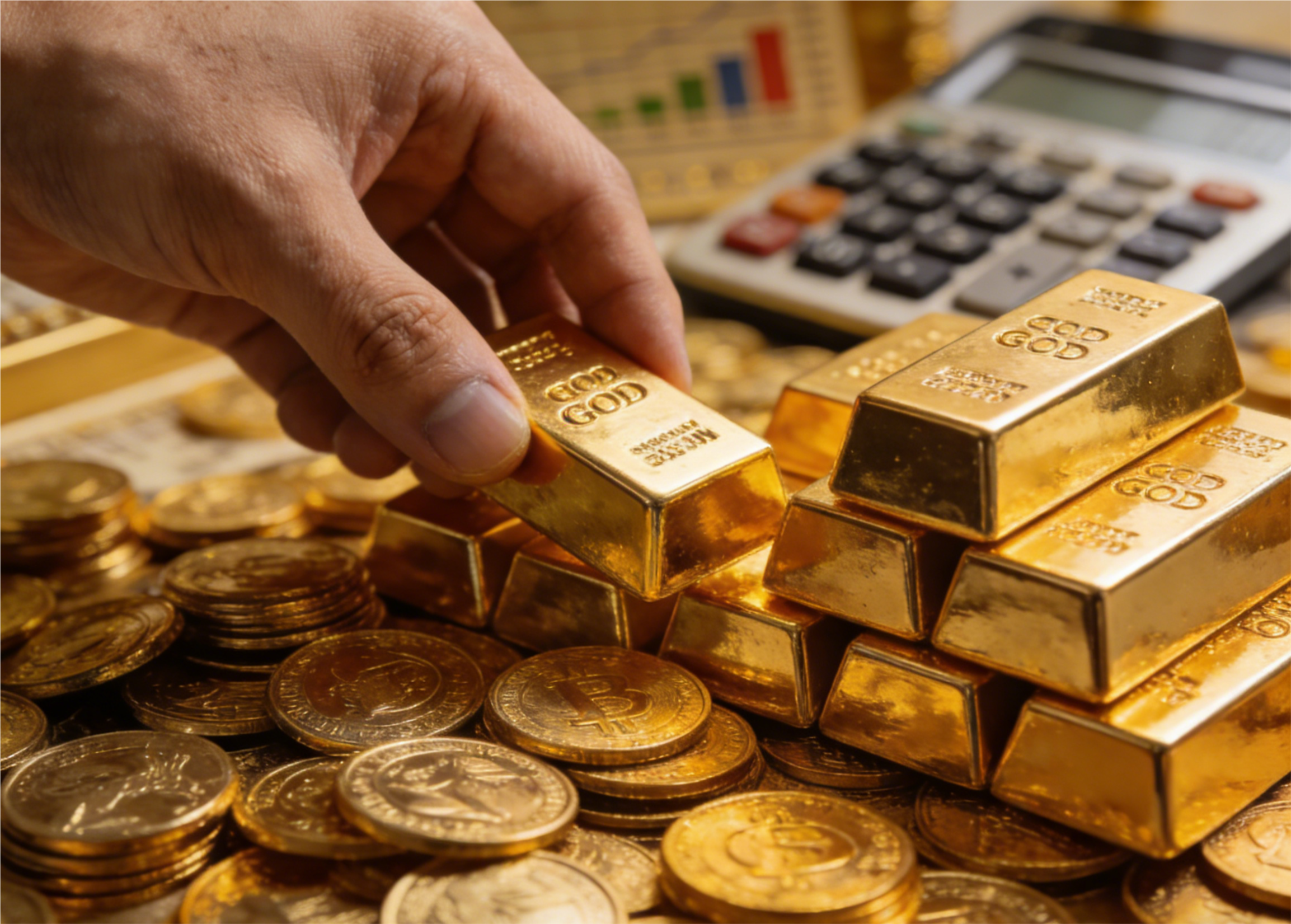
Against a backdrop of high global debt and persistent fiscal deficits, precious metals are undergoing a role transformation. Gold remains a crucial stabilizer in the global financial system, while platinum, silver, and other metals seek a new equilibrium between their industrial and financial attributes. By 2026, the drivers for precious metals will converge along three key lines: trends in real interest rates, the pace of balance sheet expansion by major central banks, and uncertainties surrounding geopolitical risks and currency credibility.
It should be noted that
Looking ahead to the 2026 metals market, a pronounced segmentation is anticipated: Industrial base metals, constrained by the global manufacturing cycle, will see their price centers stabilize but are unlikely to experience a broad-based bull market. Strategic critical minerals—such as copper, lithium, and nickel—will maintain a long-term supply-tightening trend driven by demand from new energy, energy storage, grid upgrades, and defense applications. As resource-rich nations increasingly assert mineral sovereignty and demand higher mining investment returns, rapid supply expansion has become unlikely. Essentially, pricing power in metals markets is shifting from “production scale” to “strategic attributes.”
Against a backdrop of high global debt and persistent fiscal deficits, the role of precious metals is evolving. Gold remains a crucial stabilizer in the global financial system, while platinum, silver, and other metals seek a new equilibrium between their industrial and financial attributes. By 2026, the drivers for precious metals will converge along three key lines: trends in real interest rates, the pace of major central banks' balance sheet expansion, and uncertainties surrounding geopolitical risks and monetary credibility.
It is worth noting that the global monetary system is evolving toward “multipolarity.” Multipolarity does not imply the immediate replacement of one currency by another, but rather greater dispersion in cross-border settlements, reserve structures, and asset allocation. In this environment, gold functions not only as a safe-haven asset but increasingly as a market-driven pricing mechanism for sovereign credit and policy credibility: as uncertainty rises, gold's “credit substitute” attributes become more pronounced. Ao Chong believes that gold is expected to maintain its strength, supported by loose liquidity and geopolitical risks, with global central bank gold purchases and the trend toward de-dollarization continuing as long-term underpinnings for gold prices.
If you have any inquiries or purchasing needs, please feel free to contact SunSirs with support@sunsirs.com


