

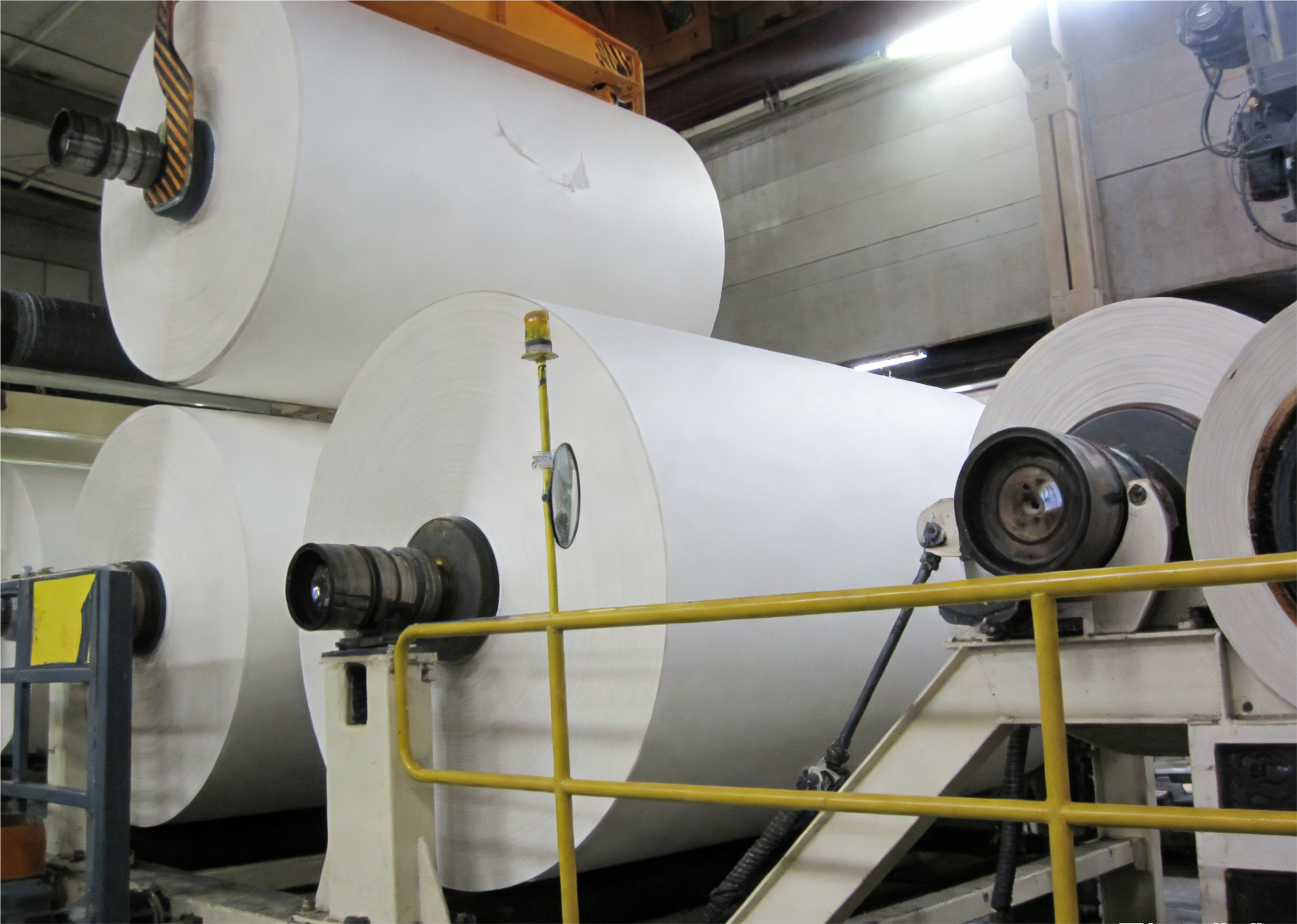
The Latin American paper products market is undergoing multiple impacts from political and economic shifts. Recent uncertainties stemming from regional elections and evolving foreign relations have directly affected trade flows, inflation levels, and growth projections, resulting in the following market characteristics.
(1) Major producing countries face significant imported and endogenous inflationary pressures. Taking Mexico as an example, its paper and paper products industry has consistently experienced high year-on-year inflation, directly driving up local production costs, eroding corporate profits, and intensifying market price volatility.
(2) Regionally, the pulp and paper production index has entered an adjustment phase following its 2022 peak. While production activity fluctuates relative to the 2018 baseline, it reflects ongoing capacity utilization adjustments and optimization amid shifting demand and cost pressures.
(3) Despite elevated costs, demand outlooks vary significantly across product categories. Packaging materials made from virgin wood pulp have maintained resilient demand, buoyed by sustained strong agricultural exports. Conversely, demand for recycled paper and cardboard has contracted due to slowing industrial activity and extreme cost-cutting measures, with plastic substitution emerging. Simultaneously, import volumes for certain segments like household paper have declined, signaling broad domestic demand weakness.
(4) Market performance varies significantly across countries due to differing economic and policy trajectories. Mexico protects its domestic industry through measures like tariff hikes, yet its domestic demand remains sluggish; Brazil's economic downturn has weakened domestic packaging demand; Peru's economy struggles amid political instability; Bolivia faces difficult economic recovery due to high inflation and fuel shortages. This fragmented landscape necessitates analysis at the country level.
Based on current dynamics, the following four trends will become key drivers shaping Latin America's paper products market by 2026.
(1) Brazil's animal protein export recovery will drive paper packaging demand. As major markets like the U.S. and China reopen to Brazilian beef, poultry, and pork imports, pent-up export demand accumulated in 2025 is expected to be released in early 2026. Given that approximately 65% of Brazil's corrugated box consumption is tied to agribusiness exports, this will directly boost demand for related paper packaging. Brazil's total containerboard demand is projected to grow by 1.2% in 2026, with shipments of corrugated boxes and paperboard products expected to increase by 1.6% to 2.0%. However, this external tailwind contrasts sharply with sluggish domestic consumption.
(2) Mexico's trade protectionism reshapes regional supply chains. Mexico's series of tariffs and anti-dumping measures strategically aim to consolidate its position as a core hub for North American nearshoring, preventing goods constrained by U.S. tariffs from transshipping through its territory. This has created substantial barriers to paper exports from Brazil and other countries to Mexico. With reduced import competition, Mexico's corrugated board plant utilization rate is projected to rebound from 75%–76% in 2025 to 78% by 2026. Consumption may achieve a 1.8% recovery after three consecutive years of decline.
(3) Asian export capacity shifts intensify competition in South American markets. Affected by Mexico's trade barriers (which account for approximately 50% of China's corrugated board exports to Latin America), Asian exporters (particularly Chinese) are actively seeking alternative markets to absorb excess capacity. South American countries like Argentina, Peru, and Brazil will become primary target markets. While this provides local downstream processors and printing industries with more supply options, it will inevitably intensify price competition and exert sustained pressure on domestic producers.
(4) Structural factors within Brazil continue to suppress domestic demand. Elevated household debt, tight credit conditions, and the shift of disposable income toward digital entertainment (such as online gaming) are structurally weakening Brazil's domestic corrugated board consumption base. By 2026, Brazil's domestic paperboard consumption is projected to extend the sluggish trend observed in 2025, achieving near-zero growth (+0.1%) at best. This creates a dual-track scenario where export-driven packaging demand contrasts with domestic stagnation.
In summary, Latin America's paper products market has entered a new phase defined by the interplay of “external policy drivers” and “internal economic constraints.” Companies no longer face a single, synchronized regional cycle but a highly fragmented landscape: export orientation coexists with weak domestic demand, trade protectionism triggers supply chain restructuring, cost inflation squeezes profits, and global capacity seeks new export outlets.
Within this complex landscape, relying on generalized regional perceptions for decision-making carries significant risk. For companies, the key to success lies in acquiring and effectively utilizing highly granular data—data that clearly reveals country-specific inflation disparities, production adjustment rhythms, shifts in material demand across segments, and actual trade flows.
Within this complex landscape, relying on generalized regional perceptions for decision-making carries significant risk. For enterprises, the key to success lies in acquiring and effectively utilizing highly granular data—data that clearly reveals country-specific inflation disparities, production adjustment rhythms, shifts in segmented material demand, and real-time trade flow reorientations. Only on this foundation can companies accurately anticipate risks, identify structural opportunities, optimize supply chain layouts, and thereby build genuine resilience and competitive advantage within Latin America's volatile market landscape.
If you have any inquiries or purchasing needs, please feel free to contact SunSirs with support@sunsirs.com
- 2026-02-03 SunSirs : 종이 및 종이 제품 산업은 2025 년에 443 억 CNY 의 총 이익을 달성했습니다.
- 2026-02-02 SunSirs : 중국의 펄프 수입은 2025 년에 7. 02% 증가합니다.
- 2026-01-30 SunSirs: 건축 자재 산업 Bulk Commodity Intelligence (2026 년 1 월 30 일)
- 2026-01-30 SunSirs: 중국 목재 펄프 가격 1 월 하락 변동, 단기적으로 약하고 안정적인 운영
- 2026-01-29 SunSirs: 중국의 펄프 시장은 2026 년까지 구조적 변화를 예상합니다.


