

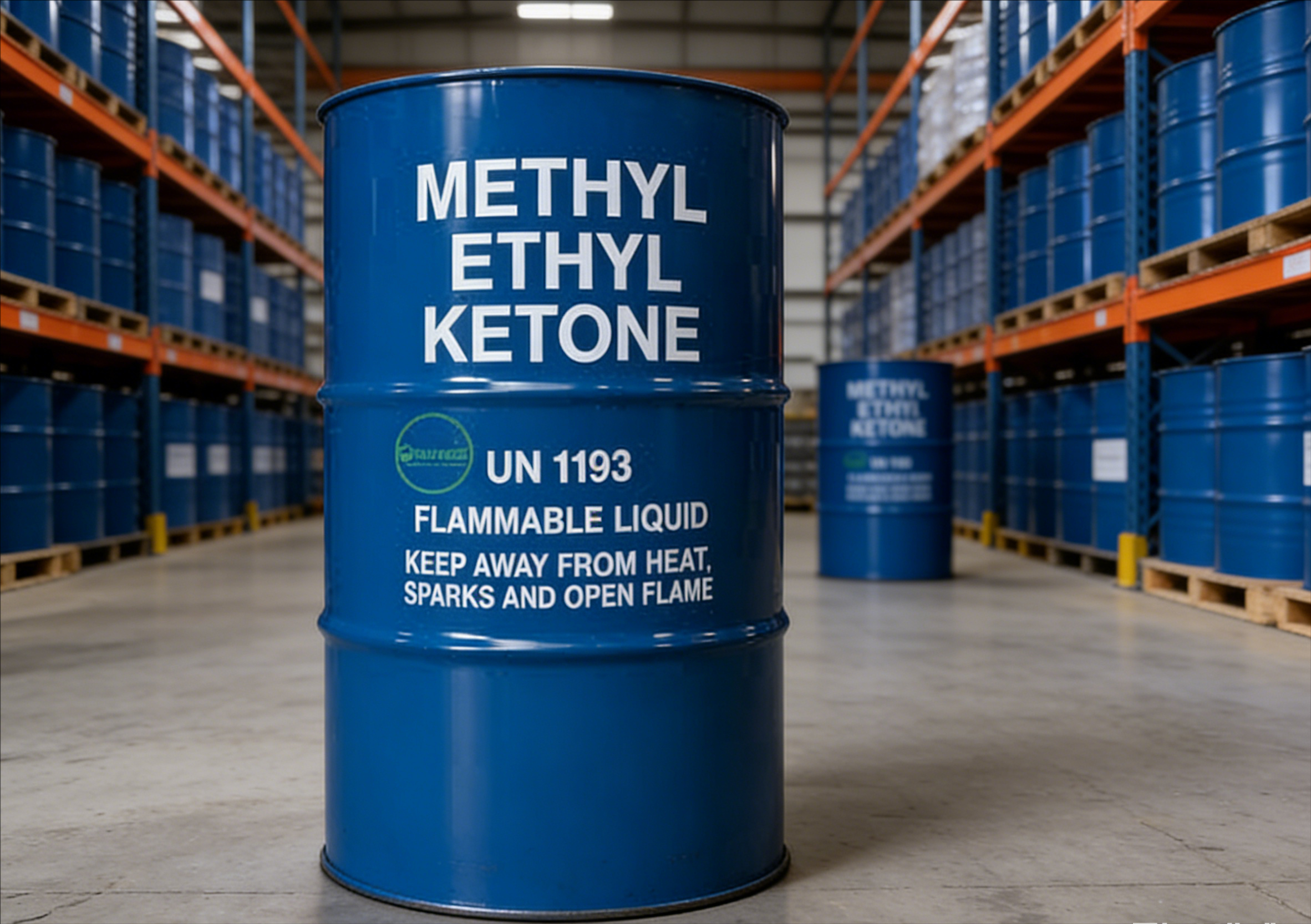
According to China Chemical News, entering 2026, supported by easing supply-demand imbalances and favorable export performance, the methyl ethyl ketone market bottomed out and rebounded. Spot prices in East China were concentrated between RMB6,300 and 6,350 per ton. However, this rally does not signal a completed market bottoming process. With core contradictions remaining unresolved, the butanone market may replicate 2025's weak trajectory, posing risks of annual average prices hitting new multi-year lows.
Supply Flexibility May Become the Norm
SunSirs analysis indicates that the core reason for butanone's prolonged stay within recent low-price ranges lies in persistently ample supply. By 2025, China's total effective methyl ethyl ketone capacity had surged to 1.097 million tons, setting a new historical high. This includes 847,000 tons/year from n-butylene hydroxylation and 250,000 tons/year from isobutyric acid esterification.
Industry insiders revealed that due to the sector's sluggish conditions, one expanded facility has remained idle since commissioning. Amid this supply-demand mismatch, the butanone industry has been compelled to respond to market challenges through supply flexibility. This phenomenon also reflects the industry's intense competitive reality.
The butanone market experienced only one significant price surge in 2025. The core driver of this increase was a sharp reduction in circulating supply caused by unexpected shutdowns and concentrated maintenance at some domestic plants, which temporarily pushed prices higher. Beyond this, when major facilities operated normally, the market exhibited pronounced supply-demand mismatch characteristics. Even during the peak season of “Golden September and Silver October,” the downward trend in methyl ethyl ketone prices persisted.
It is reported that China's methyl ethyl ketone market holds potential expansion plans totaling approximately 350,000 tons per year for 2026. Should this capacity be released as scheduled, market operating pressures will intensify further. Price and market adjustments may still rely on production-based-on-sales and planned maintenance to barely balance the supply-demand contradiction.
Profitability pressures remain unaltered
From the upstream raw material perspective, the etherified C4 market has seen its price center continuously decline under the dual squeeze of persistently inverted deep processing margins and weak terminal demand.
Early 2025 saw etherified C4 prices remain relatively firm, supported by tight supply. However, entering the second quarter, multiple bearish factors—including weak international oil prices, sluggish downstream oil product markets, and poor deep processing margins—pushed domestic etherified C4 prices into a sustained downward trend. The traditional peak season effect of “Golden September and Silver October” failed to materialize, with bearish sentiment propagating upward through the supply chain and exerting significant downward pressure on raw material prices. Although the downward trend in raw material prices has pulled down the central price level of methyl ethyl ketone (MEK) in tandem, this has also alleviated cost pressures for MEK producers to some extent, creating short-term cost-side benefits. However, this is insufficient to support an upward movement in MEK prices.
Data for 2025 indicates that major methyl ethyl ketone producers achieved average profits of RMB717, representing a 13% decline from 2024. Among these, producers utilizing the n-butylene hydroxylation process saw profits hovering around RMB500 for most of the year, with losses occurring at certain mid-year points. The maximum loss reached RMB200, placing the industry's overall profitability at a multi-year low.
Compared to previous years, profit margins for butyl hydroxyanisole producers using the n-butylene hydration method have significantly narrowed. Typically, major producers only reduce operating rates or halt production for maintenance when market prices approach cost levels, allowing the industry to achieve short-term improvements. However, butyl hydroxyanisole profits only see limited recovery during specific periods. The profitability of acetone producers using the isobutyric acid ester process is even weaker, with most of 2025 spent in a loss-making state. Consequently, these enterprises primarily switch to producing isobutyric acid ester.
In 2026, etherified C4 is highly likely to continue its weak performance. While methyl ethyl ketone producers may see reduced cost pressures and potential profit expansion during certain periods, improved profitability will stimulate existing capacity to operate at full load and accelerate the ramp-up of new capacity. This will suppress price rebound potential, making it unlikely for the industry to achieve effective profit recovery on average throughout the year.
Sluggish Demand Recovery
Inadequate demand growth failing to match supply expansion will be the key factor driving acetone butyl ester market trends in 2025.
Taking the coatings industry as an example, underperforming real estate and construction sectors have trapped the industry in a predicament of low selling prices, high costs, and thin margins, intensifying market competition.
End-user manufacturers exhibit two distinct characteristics in acetone procurement: First, significantly heightened price sensitivity—when acetone prices plummet to absolute lows, some downstream enterprises may shift to substitute materials or engage in stockpiling. Second, downstream users tend to replenish inventories in concentrated bursts based on production cycles and price forecasts. While this behavior can temporarily boost the market, it struggles to translate into sustained demand momentum.
On the export front, although methyl ethyl ketone (MEK) exports remained at high levels, partially diverting pressure from the domestic market, export volumes in 2025 are projected to decline compared to 2024. Consequently, the role of exports as a “pressure relief valve” has weakened.
Looking ahead, the outlook for methyl ethyl ketone exports has become increasingly uncertain due to risks of slowing global economic growth and intensifying international market competition. Overall, the methyl ethyl ketone industry will continue to face a situation of ample supply and insufficient demand, with the possibility of the annual average market price hitting a new historical low.
As an integrated internet platform providing benchmark prices, on January 22nd, the benchmark price of methyl ethyl ketone (MEK) according to SunSirs was 6416.67 RMB/ton, an increase of 0.52% compared to the beginning of the month (6383.33 RMB/ton).
Application of SunSirs Benchmark Pricing:
Traders can price spot and contract transactions based on the pricing principle of agreed markup and pricing formula (Transaction price=SunSirs price + Markup).
If you have any questions, please feel free to contact SunSirs with support@SunSirs.com


