

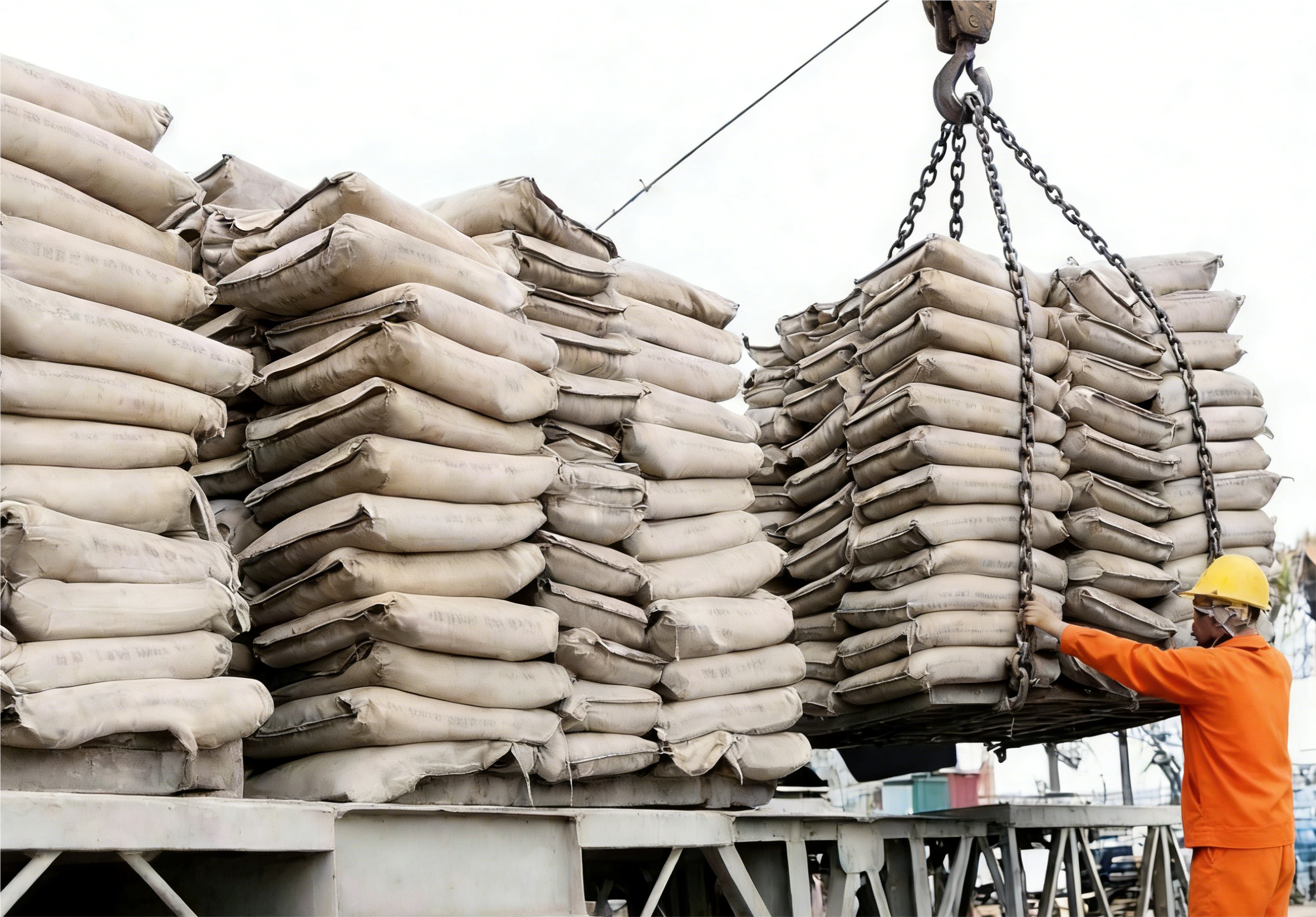
Abstract: Data from the National Bureau of Statistics shows that in 2025, China's cumulative cement output reached 1.693 billion tons, marking a year-on-year decrease of 6.9%. This decline matched the rate observed from January to November, narrowing by 2.6 percentage points compared to the same period last year. The output level represents the lowest for this period since 2010. In December, monthly cement output reached 144 million tons, down 6.6% both month-on-month and year-on-year.
During December, national cement demand continued to weaken month-on-month and declined year-on-year due to tight capital, colder temperatures, snowfall, and extensive environmental controls. Regionally, northern areas saw demand near its end due to low temperatures, while southern regions remained in final construction phases with relatively stable demand. According to the cement shipment rate—a market demand indicator monitored by Digital Cement Network—the national average shipment rate in December saw a slight month-on-month and year-on-year decline of 2-3 percentage points, indicating shrinking demand. From January to December, cumulative national cement production decreased by 6.9% year-on-year, maintaining the same decline rate as January-November.
At the macro level, declines in both national fixed-asset investment and infrastructure investment continued to widen. Within infrastructure investment, rail transport, road transport, and water conservancy management all saw year-on-year decreases. Notably, rail transport investment shifted from positive to negative growth, while declines in road transport and water conservancy management investment deepened. Real estate developers maintained sluggish new construction starts and land acquisition activities, with development investment contracting significantly. Nationwide real estate development investment saw a widening year-on-year decline, with construction area, new construction starts, and corporate funding all experiencing double-digit year-on-year drops. The real estate sector remains in a critical transition phase between old and new development models, which will continue to negatively impact cement demand in the short term.
I. Cumulative National Cement Production Declines Year-on-Year, but Decline Narrows Compared to Same Period Last Year
Data from the National Bureau of Statistics shows that in 2025, cumulative national cement production reached 1.693 billion tons, down 6.9% year-on-year. This decline matched the rate observed from January to November but narrowed by 2.6 percentage points compared to the same period last year, marking the lowest production level for this period since 2010. In December, monthly cement production stood at 144 million tons, down 6.6% both month-on-month and year-on-year.
In December, affected by tight capital, cooling temperatures, snowfall, and extensive environmental controls, national cement market demand continued to weaken month-on-month and also declined year-on-year, though the rate of decline stabilized. Regionally, demand in northern areas was largely winding down due to cold weather, while southern regions remained in the final push phase with relatively stable demand. The cement shipment rate—a key indicator of actual market demand monitored by Digital Cement Network—showed a slight month-on-month and year-on-year decline of 2-3 percentage points in December, indicating a contraction in demand.
II. Fixed Asset Investment and Infrastructure Investment Decline Continues to Widen
In 2025, national fixed-asset investment (excluding rural households) totaled RMB 48.52 trillion, down 3.8% year-on-year. This decline widened by 1.2 percentage points compared to the January-November period, while the same period last year saw a 3.2% increase. On a monthly basis, fixed-asset investment (excluding rural households) fell 1.13% month-on-month in December.
In 2025, national infrastructure investment (excluding power) decreased by 2.2% year-on-year, with the decline widening by 1.1 percentage points compared to January-November. This contrasts with a 4.4% increase during the same period last year. Specifically, investment in rail transport decreased by 1.2% year-on-year, road transport investment fell by 6%, and water conservancy management investment dropped by 6.3%.
III. Real Estate Development Investment Decline Hits New Low
In 2025, national real estate development investment totaled CNY8.28 trillion, down 17.2% year-on-year. This decline widened by 1.3 percentage points compared to January-November and expanded by 6.6 percentage points year-on-year. Residential investment amounted to CNY 6.35 trillion, down 16.3% year-on-year.
In 2025, the floor area of buildings under construction by real estate developers reached 6.599 billion square meters, down 10% year-on-year. The floor area of newly started construction projects totaled 588 million square meters, down 20.4% year-on-year. Among these, the floor area of newly started residential construction decreased by 19.8%.
In 2025, funds secured by real estate developers amounted to CNY 9.31 trillion, down 13.4% year-on-year.
Compared with the same period last year, the declines in funds raised, construction area, and new construction area all narrowed slightly, showing signs of marginal improvement. However, the decline in development investment significantly widened compared with the same period last year, indicating that overall pressure has not fundamentally eased.
2026 marks the beginning of the 15th Five-Year Plan period. The policy environment is expected to remain accommodative, and the industry will undergo deep adjustments to lay a solid foundation for establishing a new development model that is long-term, healthy, and stable.
If you have any inquiries or purchasing needs, please feel free to contact SunSirs with support@sunsirs.com
- 2026-01-20
- 2026-01-15
- 2026-01-14
- 2026-01-13
- 2026-01-05 SunSirs : 2025 年の中国セメント産業の主要イベントのレビュー


