

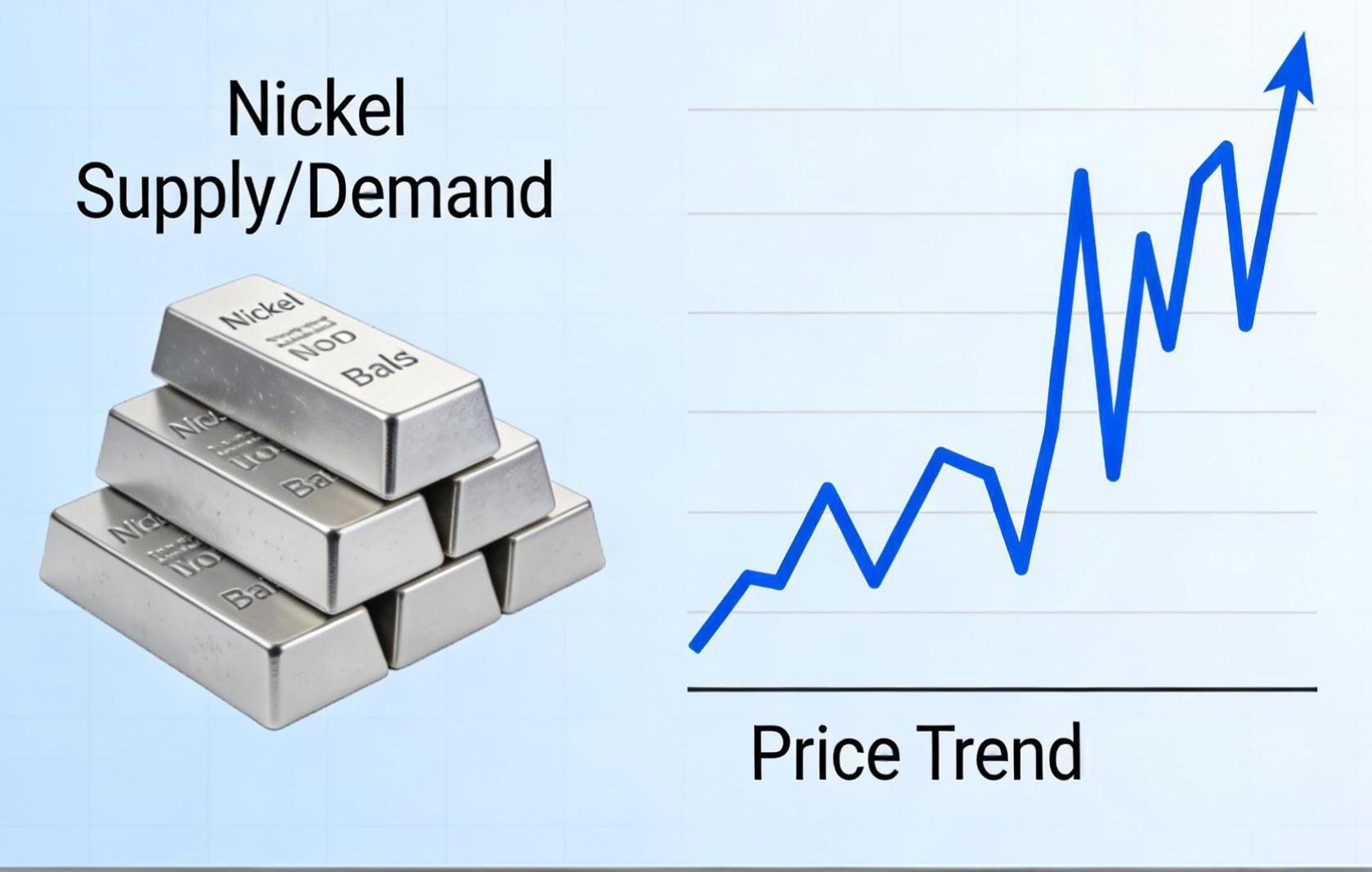
Macro capital influx leads to a significant rebound in nickel prices
Recently, nickel prices have continued to rebound, breaking through the previous oscillating range, with the main Shanghai nickel contract price once approaching 150,000 yuan per ton. On January 8, nickel prices fell sharply due to a significant increase in LME inventories and a decline in the overall bullish sentiment in the non-ferrous metals sector. As of 3 p.m. on January 8, the main Shanghai nickel contract closed at 136,800 yuan per ton, and the LME 3-month nickel contract was quoted at 17,140 US dollars per ton.
The recent significant rebound in nickel prices essentially stems from the massive inflow of macro funds against the backdrop of a general rise in commodities, reversing the downward trend of nickel prices caused by the continuous squeeze of industrial funds on the trading market under the context of oversupply. Looking at the LME position report, recently, the net long positions of investment funds have increased significantly. As of December 29, 2025, LME nickel commercial institutions held a net short position of 31,633 lots, with the short exposure expanding by 11,090 lots compared to the same period of the previous month; investment funds held a net long position of 21,014 lots, with the long exposure expanding by 10,573 lots compared to the same period of the previous month.
The fundamental pressure on nickel remains significant
From the perspective of supply and demand, in 2026, if Indonesia's nickel ore quota supply is relatively sufficient, nickel will still face significant oversupply pressure. In 2026, with the commissioning of some projects in Indonesia, the situation of excess nickel supply will remain obvious, and the prices of ferronickel and refined nickel will come under significant pressure. For ferronickel, supported by the rigid cost of pyrometallurgical ore, it is expected that the price will periodically fall below the cash cost of some enterprises, forcing enterprises to reduce or stop production and achieve rebalancing of supply and demand. For refined nickel, there is the possibility of a switch in the valuation anchor, and its performance may be weaker than the price of ferronickel.
However, due to the recent inflow of macro funds, refined nickel has become the strongest-performing segment in the industrial chain in terms of prices. According to data as of January 8, the ex-factory price of high-nickel pig iron with 10%~12% nickel content was quoted at 960 yuan per nickel unit, the price of SMM 1# nickel was 149,050 yuan per ton, and the premium of refined nickel over nickel pig iron reached 53,000 yuan per nickel ton. At the same time, refined nickel also showed a significant premium over the price of nickel sulfate. The high premium of refined nickel means that the motivation for Indonesian RKEF production lines to switch to producing high-grade nickel matte and for MHP to produce refined nickel instead of nickel sulfate has been significantly enhanced. In January, the output of refined nickel is expected to see substantial growth.
Who will prevail between macro funds and industrial funds
From a fundamental perspective, the pressure of oversupply in the nickel industry remains quite significant, but this does not mean that nickel prices will return to their original level with the involvement of industrial capital in hedging. Since December 22, 2025, the positions in the Shanghai nickel futures market have increased by 139,000 lots, corresponding to 139,000 tons of refined nickel, while the positions in the London nickel futures market have increased by 33,000 lots, corresponding to 198,000 tons of refined nickel. Under a pessimistic scenario, the surplus of refined nickel in 2026 will be less than 300,000 tons. Currently, the volume of bottom-fishing funds is sufficient to absorb the annual surplus of the nickel industry chain.
Therefore, although the pressure from nickel surplus is significant, the scale of bottom-fishing funds is huge and there is no sign of withdrawal yet, making it difficult for nickel prices to experience a unilateral and continuous decline. At the same time, whether RKAB will reduce its quotas cannot be falsified in the short term, and nickel prices should also enjoy a certain portion of risk premium. Based on a comprehensive prediction, nickel prices may turn to a high-level wide-range fluctuating trend in the future. However, if there is a continuous increase in inventory or obvious signs of long funds withdrawing, this round of rising nickel prices may gradually come to an end.
If you have any inquiries or purchasing needs, please feel free to contact SunSirs with support@sunsirs.com
- 2026-01-16
- 2026-01-15
- 2026-01-14
- 2026-01-13
- 2026-01-12 SunSirs: На прошлой неделе цены на никель сначала выросли, а затем упали (5 - 9 января)


