

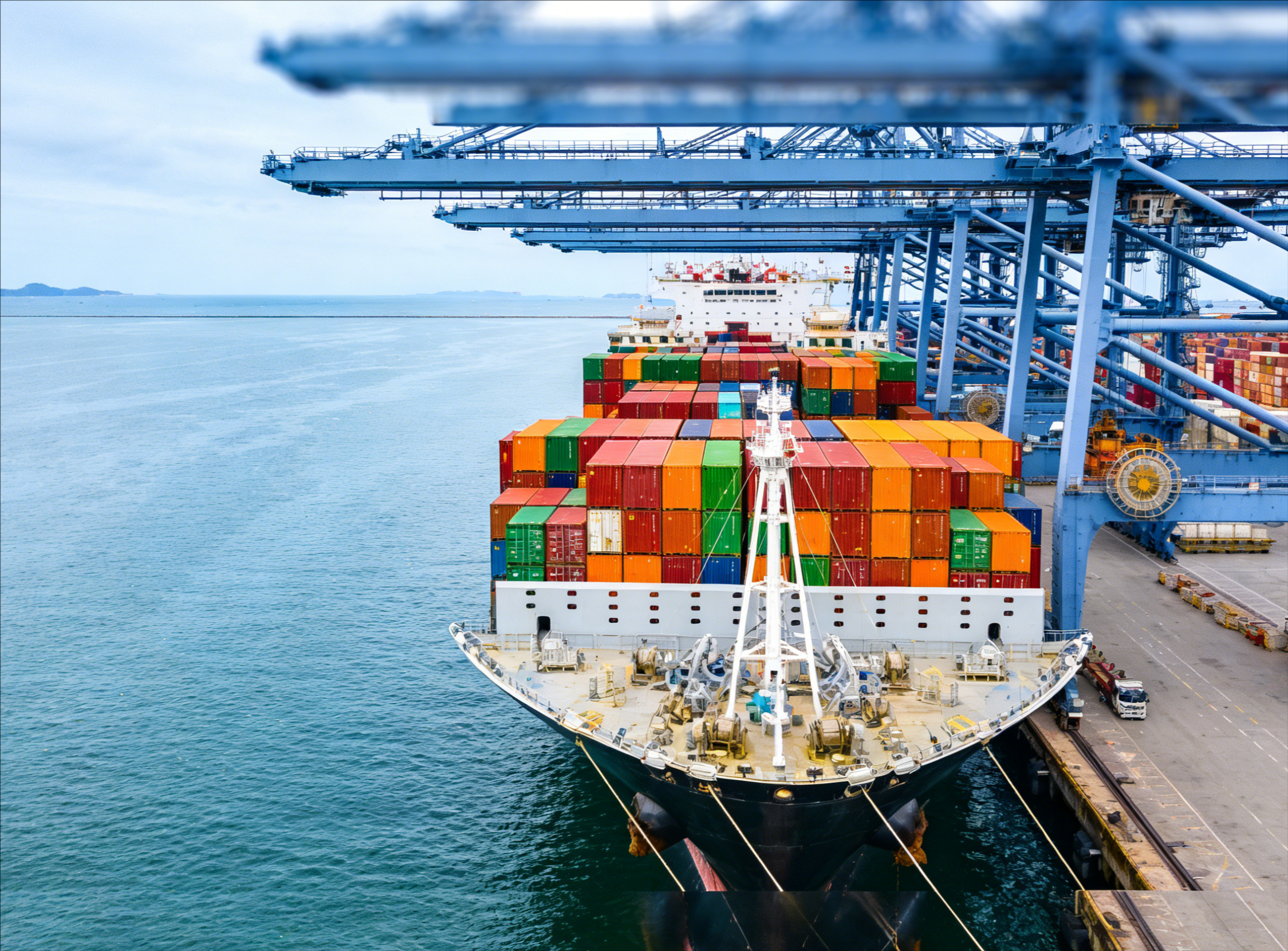
In 2025, shipping trends for major commodities diverged. Iron ore exports saw slight growth, with China remaining the largest importer despite slowing steel production. Coal shipments declined, reflecting China's intensified supply security efforts and its energy transition toward renewable sources. Bauxite volumes surged significantly, driven by robust Chinese aluminum production and growing demand as a substitute for high-cost copper. Amid weak domestic demand, China's steel exports increased, with India emerging as a major destination.
Iron Ore
Signal Ocean data indicates that seaborne iron ore shipments grew by 2.5% in 2025, reaching 1.8 billion tons. Australia remained the world's largest supplier, accounting for 55% of seaborne exports—unchanged from the previous year. China absorbed 75% of seaborne volumes, maintaining 2024 levels. Against a backdrop of 2.5% growth in global trade volumes, China's iron ore imports in 2025 increased by 23 million tons compared to 2024.
The iron ore market will reach a critical juncture in 2026, with prices likely facing significant downward pressure. Market consensus anticipates that China's steel output will continue to decline year-on-year as the government tightens capacity controls and global trade barriers curb export opportunities. As the world's largest consumer, its weakening demand coincides with imminent supply surges: the Simandou project—the world's largest undeveloped high-grade iron ore deposit—will gradually commence production. Upon reaching full capacity, this project will yield 120 million tons annually.
India plans to boost steel output by 2026 to meet infrastructure-driven domestic demand growth. However, its iron ore imports accounted for less than 2.5% of global total in both 2024 and 2025, meaning its production growth remains insufficient to substantially impact the shipping market.
Falling iron ore prices may prompt buyers to replenish inventories, thereby supporting export volumes. However, given that iron ore inventories at Chinese ports are already at elevated levels, this effect will be limited in the short term. Buyers tend to wait for prices to bottom out further before entering the market. The low prices in 2025 have already triggered inventory accumulation, and this growth is unlikely to be sustained in 2026.
Coal
Signal Ocean data indicates seaborne coal shipments declined by 3.4% to 1.4 billion tons in 2025. Indonesia accounted for 37% of TSOP's seaborne coal trade, slightly down from 38% in 2024. China remained the largest importer, though its share fell to 29% from 31% in 2024.
Coking coal dominated seaborne coal shipments, accounting for approximately 77%. China's seaborne thermal coal imports decreased by 11% year-on-year in 2025, primarily due to increased domestic supply. Latest data from the National Bureau of Statistics shows China's coal production grew by 3% in 2025 compared to the same period in 2024. A more significant trend is China's gradual reduction in reliance on thermal power generation and accelerated transition toward renewable energy. Statistics indicate that China's thermal power generation declined by 1% year-on-year in 2025, while solar, wind, hydro, and nuclear power generation all significantly exceeded 2024 levels. During the same period, total power generation still achieved a 2.4% increase.
Looking ahead to 2026, seaborne coal demand may face greater pressure. As China's power growth is primarily driven by renewables, coal demand remains under sustained pressure. Although China has added new coal-fired power generation capacity, this is largely driven by energy security considerations rather than an intent to increase coal consumption.
This will impact demand for large bulk carriers. Given the already dim outlook for iron ore demand, coal trade volumes declining for the second consecutive year will hit demand for Capesize vessels, particularly in the Pacific market.
Bauxite
Signal Ocean data indicates that seaborne bauxite shipments will surge by 18% in 2025, reaching 175 million tons. Guinea remains the dominant supplier, increasing its market share from 65% to 68%. China further solidifies its position as the largest destination, with its share of total seaborne imports rising from 83% in 2024 to 85% in 2025.
China's aluminum output will demonstrate robust performance in 2025, with monthly production averaging slightly above the annualized capacity ceiling of 45 million tons (December data pending). Driven by copper supply shortages and elevated prices, aluminum substitution for copper is accelerating. Despite 39% lower electrical conductivity than copper, aluminum offers a cost advantage of 3 to 4 times per unit weight.
This will support China's aluminum smelters in maintaining high capacity utilization rates through the first quarter of 2026. Another driver is the overall tightening of aluminum supply, as high electricity costs in Europe and the Americas curb production. Consequently, bauxite shipments to China are expected to remain at elevated levels through early 2026.
Bauxite trade injects positive momentum into the Capesize market. While bleak iron ore and coal outlooks may dampen Capesize demand, bauxite supply is expected to maintain its growth trajectory. Long-term, Guinea's domestic bauxite processing restructuring will eventually impact supply, but this effect is anticipated to materialize only in the future, posing no significant short-term shock to the market.
Steel
Signal Ocean data indicates that seaborne steel shipments increased by 4% in 2025, reaching 233 million tons. Unlike the commodities mentioned earlier, China is not the primary importer. The countries with the highest share of seaborne shipments are the United States (9%), Turkey (8%), and India (4%). The United States and Turkey maintained their 2024 rankings, while India entered the top three, surpassing Mexico, Indonesia, and China.
China dominates as the export source. In 2025, steel shipments originating from China surged significantly to 39% of total volume, up from 33% in 2024. This reflects weak domestic demand, compelling producers to shift toward exports for outlets.
China's demand is projected to remain weak in 2026, though the decline is expected to moderate. Given the steel industry's persistent oversupply, even if Chinese mills reduce output as anticipated in 2026, their export orientation is unlikely to change. Among target markets, India demonstrates the greatest growth potential. India's steel demand is projected to grow by 9% in 2026, with imports rising annually to meet domestic needs. Although tariffs apply to certain steel imports, their rates remain significantly lower than those in European and American markets. India is expected to occupy an increasingly important position in the global steel import landscape from 2026 onwards.
The vast majority of steel products transported by sea are carried by Supramax vessels, accounting for 47% since 2022. However, steel accounts for less than 9% of all cargo transported by Supramax vessels by tonnage. This suggests steel shipments are unlikely to substantially impact Supramax freight rates. This phenomenon is more pronounced on medium-to-short-haul routes, such as China-India or China-Southeast Asia. Consequently, freight rates for Supramax vessels on these routes may be pressured upward based on expectations of increased Chinese steel exports, particularly to India.
China's Influence Will Deeply Shape Bulk Commodity Shipping Demand by 2026
How China reshapes its production landscape in steel, power generation, and aluminum will be a key variable for dry bulk shipping demand in 2026. Increased reliance on renewable energy and reduced steel production will significantly impact iron ore and coal, two core bulk commodities. While robust Chinese bauxite demand and positive aluminum market prospects provide support for related transportation, the production ceiling reached in 2025 has capped further growth in bauxite demand. Additionally, steel trade outside conventional shipping routes is unlikely to substantially influence freight rates.
In summary, freight rates are expected to face downward pressure in 2026. Tariff barriers, the European Carbon Border Adjustment Mechanism (CBAM), and related policies have intensified market expectations of a weakening trend. However, the situation remains fluid, with supply chain disruptions triggered by geopolitical conflicts, natural disasters, or escalating sanctions capable of reversing market dynamics at any moment.
If you have any inquiries or purchasing needs, please feel free to contact SunSirs with support@sunsirs.com
- 2026-01-16
- 2026-01-16
- 2026-01-14
- 2026-01-14
- 2026-01-13 SunSirs: Üretim Alanlarının Fiyat Eğilimleri Farklılaştırıldı, Çin Termal Kömür Piyasası Yakın Gelecekte Hafif Dalgalanma Koruyacak


