

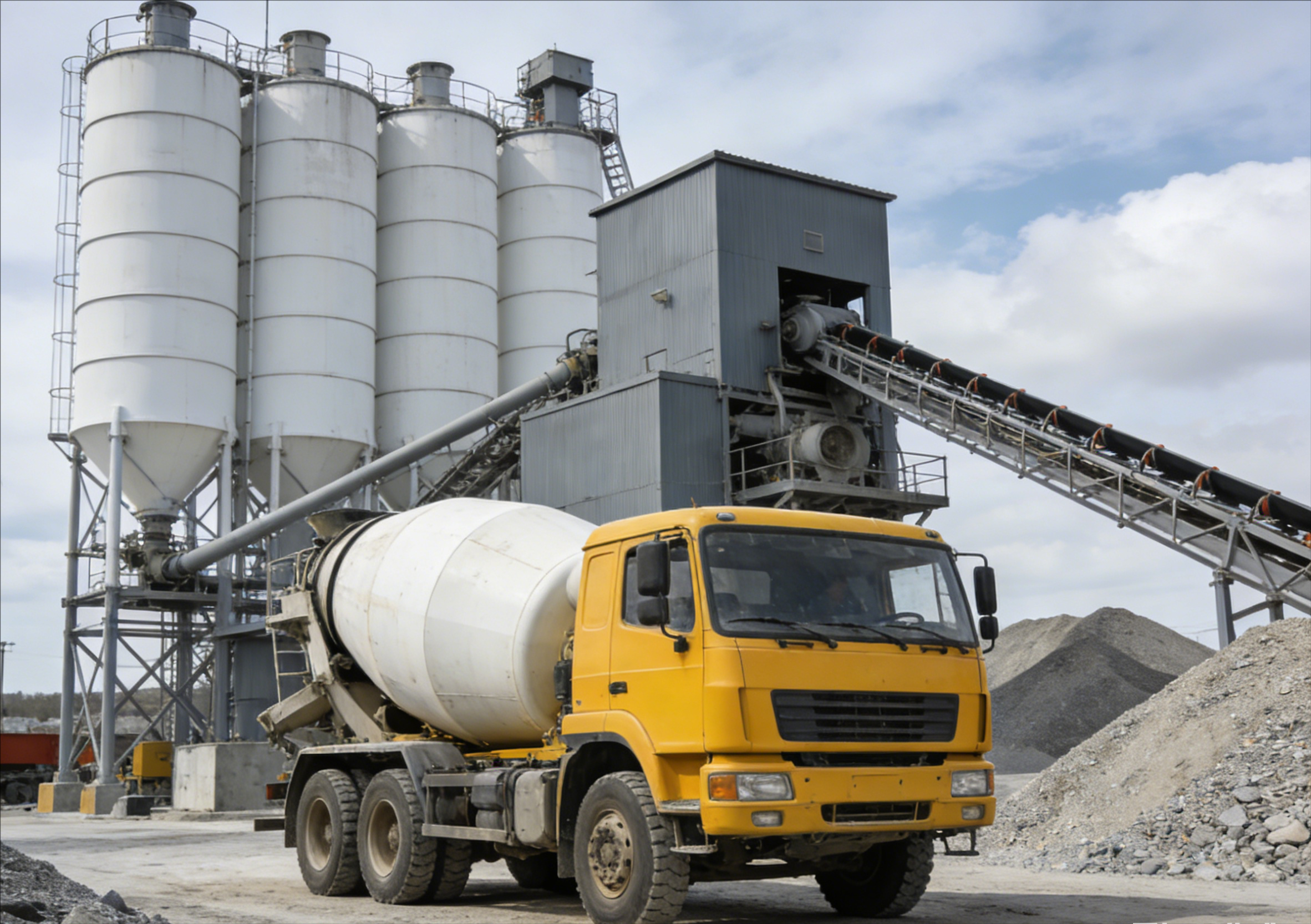
Against a backdrop of persistently shrinking market demand and increasingly pronounced supply-demand imbalances, the cement industry is undergoing profound transformation centered on capacity replacement. Recently, numerous provinces across China have intensively publicized supplementary capacity replacement plans for cement enterprises. This move not only reflects the implementation of national capacity control policies but also signals the industry's departure from disorderly overproduction and its shift toward compliant, high-quality development.
From regional shifts in capacity replacement and corporate differentiation to phased adjustments in price trends, China's cement sector is undergoing profound restructuring as it transitions from an expansionary market to a consolidation phase. Dual forces of policy guidance and market competition are reshaping the industry's landscape and development trajectory.
However, industry observers caution that given the sector's deep restructuring phase, expectations for cement prices and corporate profitability in 2026 should remain tempered.
Multiple Regions Publicize Cement Capacity Replacement Plans
Recently, the pace of capacity replacement in the cement industry has accelerated, with several provinces intensively releasing public notices and announcements regarding supplementary capacity replacement plans for cement enterprises within their jurisdictions.
On January 8, the Zhejiang Provincial Department of Economy and Information Technology announced the supplementary capacity replacement plan for the cement clinker production line of Changshan Nanfang Cement Co., Ltd.
On January 7, the Shandong Provincial Department of Industry and Information Technology released supplementary capacity replacement plans for cement clinker production lines at multiple enterprises, including Jidong Cement (Yantai) Co., Ltd., Xintai Zhonglian Taifeng Cement Co., Ltd., and Pingyi Zhonglian Cement Co., Ltd.
Beyond Zhejiang and Shandong, regions including Yunnan, Guangdong, and Hubei have also successively issued announcements regarding supplementary capacity replacement plans for cement enterprises within their jurisdictions.
In recent years, the building materials industry has faced multiple pressures, including sustained market demand decline and prominent structural supply-demand imbalances. Traditional segments like cement and flat glass have been doubly impacted by the sluggish real estate market and slowing infrastructure investment growth, resulting in continuous declines in production and sales volumes. The industry's economic performance has come under significant pressure, with several leading cement companies already reporting losses in the first half of 2025. Simultaneously, the long-standing historical issue of “actual production capacity far exceeding registered capacity” in the cement industry has further intensified disorderly market competition and dragged down industry profitability.
Against this backdrop, the Ministry of Industry and Information Technology, in collaboration with five other ministries including the Ministry of Natural Resources and the Ministry of Ecology and Environment, issued the “Work Plan for Stabilizing Growth in the Building Materials Industry (2025-2026)” in 2025. This plan designates cement capacity control as a core measure for growth stabilization, aiming to promote industry consolidation through standardized capacity management mechanisms.
The Industry Advances into the Deep Waters of Compliance Transformation
The ongoing tightening of capacity replacement policies in the cement industry has not only accelerated the survival of the fittest but also intensified regional development disparities. Analysis of regional capacity indicator transfer data reveals a distinct “north-to-south, west-to-east” pattern in the current compliance-driven capacity supplementation process, with resources increasingly concentrating in advantageous regions.
Long-term policy guidance will steadily steer the cement industry toward “intensification and decarbonization.” Leading enterprises are poised for high-quality development during this adjustment phase by consolidating regional capacity, expanding green building materials portfolios, and establishing overseas market presence. Concurrently, sustained infrastructure investment and accelerated green building adoption are expected to foster new demand drivers, propelling the industry back onto a sustainable growth trajectory.
The core objective of the current capacity replacement policy is not merely to meet replacement quotas, but to align enterprises' registered capacity with actual production levels, ensuring industry-wide compliance. Previously, overproduction was widespread in the cement sector, with some enterprises operating at 20%-40% above their registered capacity. Even if capacity replacement is fully implemented and enterprises strictly adhere to registered production levels, persistent demand decline will likely maintain industry overcapacity at around 30%. National cement demand is projected to decline by 5% year-on-year in 2026, falling from 1.69 billion tons in 2025 to approximately 1.6 billion tons.
Cement Prices Expected to Bottom Out and Rebound
In 2025, national cement prices opened high but closed low, trending downward throughout the year to reach the lowest level for that period in recent years.
Regarding future cement market price trends, industry insiders and institutions have offered multi-dimensional assessments. Overall, the market exhibits phased characteristics: a short-term rebound from low levels, medium-term operation at low levels, and long-term recovery after bottoming out. The industry is undergoing a period of deep adjustment as it transitions from incremental growth to stock-based operations.
If you have any questions, please feel free to contact SunSirs with support@SunSirs.com
- 2026-02-12 صناعة الأسمنت في عام 2026: الطريق إلى إعادة الهيكلة البيئية وسط سوق راكدة
- 2026-02-09 SunSirs: من المتوقع أن تتحسن هوامش الربح في صناعة الأسمنت بشكل طفيف بحلول عام 2026
- 2026-02-03 صن سيرز: صناعة مواد البناء تتقدم في الحد من التلوث وقطع الكربون عبر سلسلة التوريد بأكملها
- 2026-02-02 صن سيرز: صناعة الأسمنت في الصين تشهد انتعاشًا كبيرًا في الأرباح في 2025
- 2026-01-26


